Discover the “Big Shape Energy” Secret to Painting Bold, Confident Mountain Landscapes in Oil!

Scott Hamill shows you the powerful simplification method behind his award-winning approach to New Zealand’s Southern Alps ... so your landscapes finally feel loose, alive, and full of atmosphere ... even if you’ve never painted mountains before.

HURRY, DISCOUNT ENDS SOON!

Available in both Streaming and DVD Formats

00Days
00Hours
00Minutes
00Seconds
You can render the rocks accurately. Draw the ridgeline with care. Mix the right gray for the granite, the right green for the treeline, the right blue for the shadows in the snow.

And the painting still looks like a decorated wall.

Because what makes a mountain feel like a mountain is never the surface detail. It’s the air between you and the summit ... the way light scatters across three miles of atmosphere, the way color cools and edges dissolve and the farthest peak becomes barely distinguishable from the sky.

That is what makes someone stop in front of a mountain painting.

Why do they lean in?

Why do they feel the altitude in a room with no wind?

A great landscape doesn’t describe a mountain. It puts you at the foot of one.

Now, the problem is getting that feeling onto the canvas...

...and most painters have been solving it by doing exactly the wrong thing.

You stand before the scene. You see the grandeur, the complexity, the overwhelming detail. And your instinct says: Paint it all. Render every ridge. Define every rock. Sharpen every edge. Honor the mountain by getting it right.

So you do. Carefully. Faithfully. For hours.

And somewhere in all that fidelity, the feeling quietly leaves the room.

So the conclusion arrives: I must need more. More precision. A smaller brush. Another pass at the rocks. Maybe if I just tighten up the foreground a little more, the whole thing will finally come together.

It never does. Because more detail was never the missing piece.
One of the hardest things a landscape painter will ever try to do is to capture the majesty of mountains. How do you give life and energy to something made from solid, ancient rock?

Scott Hamill reverses the order entirely.

Feel the scene first.

Establish the big shapes that carry the emotion.

Then use one brush, a limited palette, and the discipline to leave things out ... so the viewer’s eye finishes the painting for you.

“Don’t paint what the mountain looks like. Paint what the mountain did to you.”

Most instructions teach you to add.

Scott teaches you to subtract.

And he proves it.

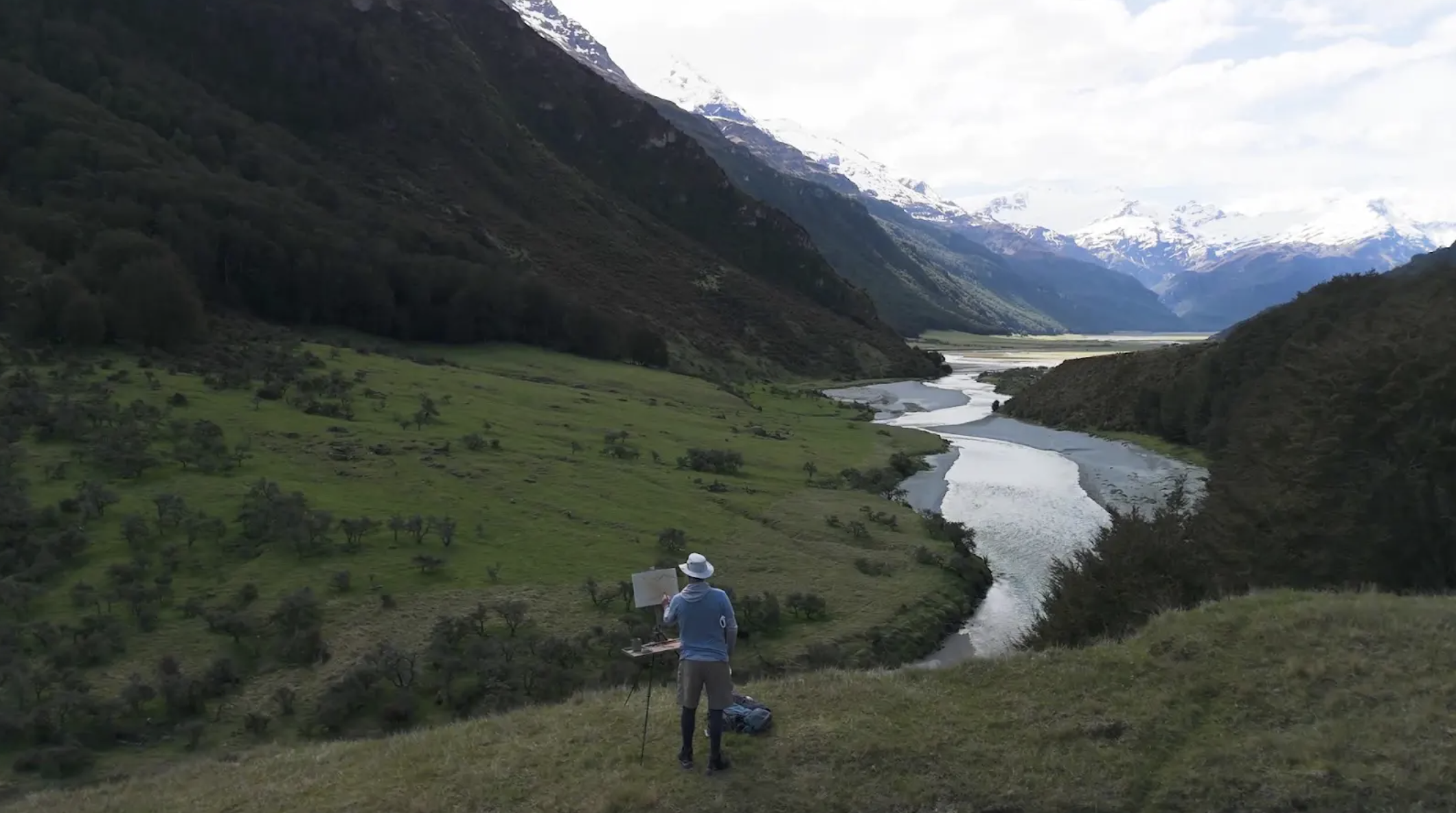
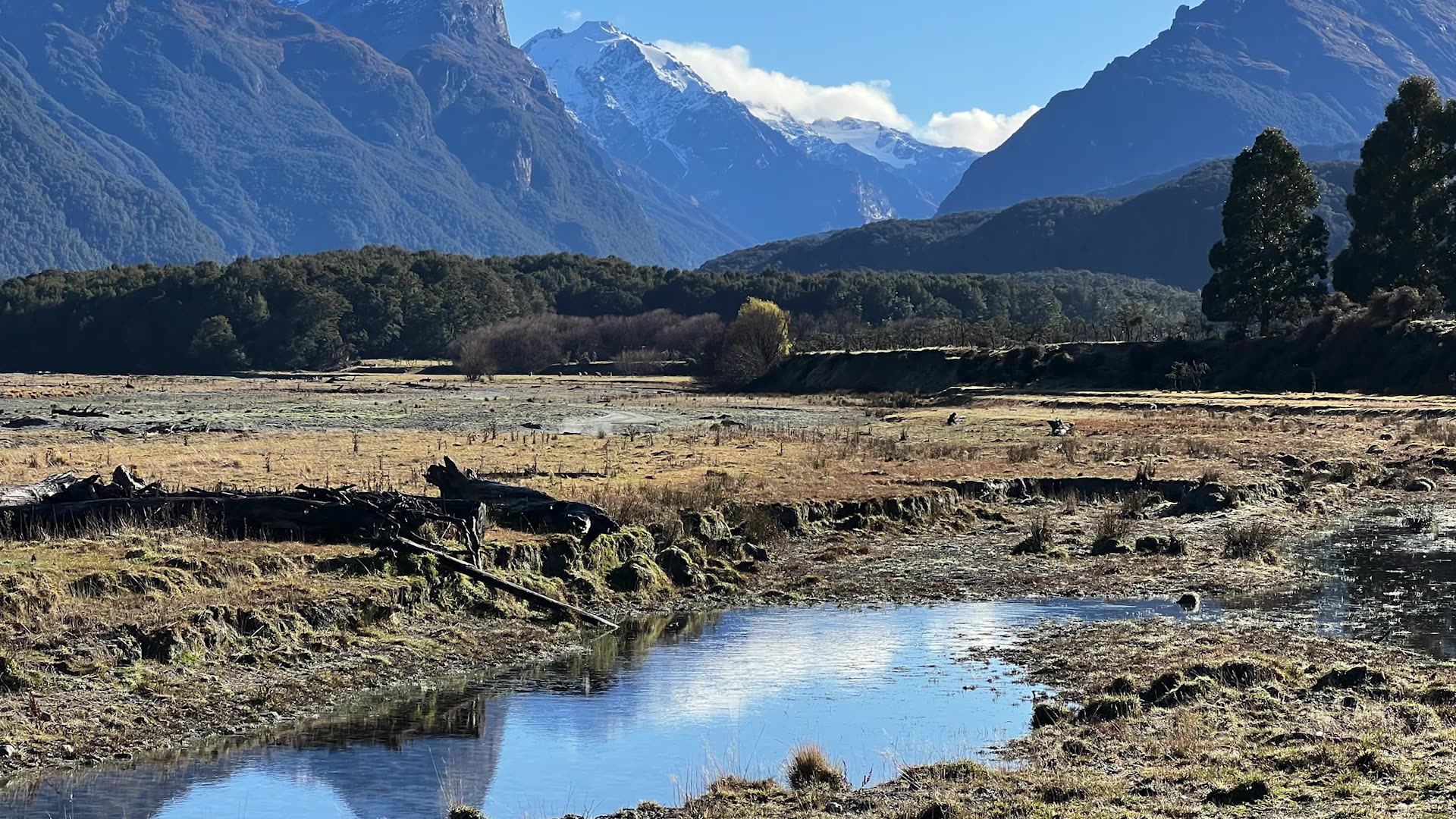
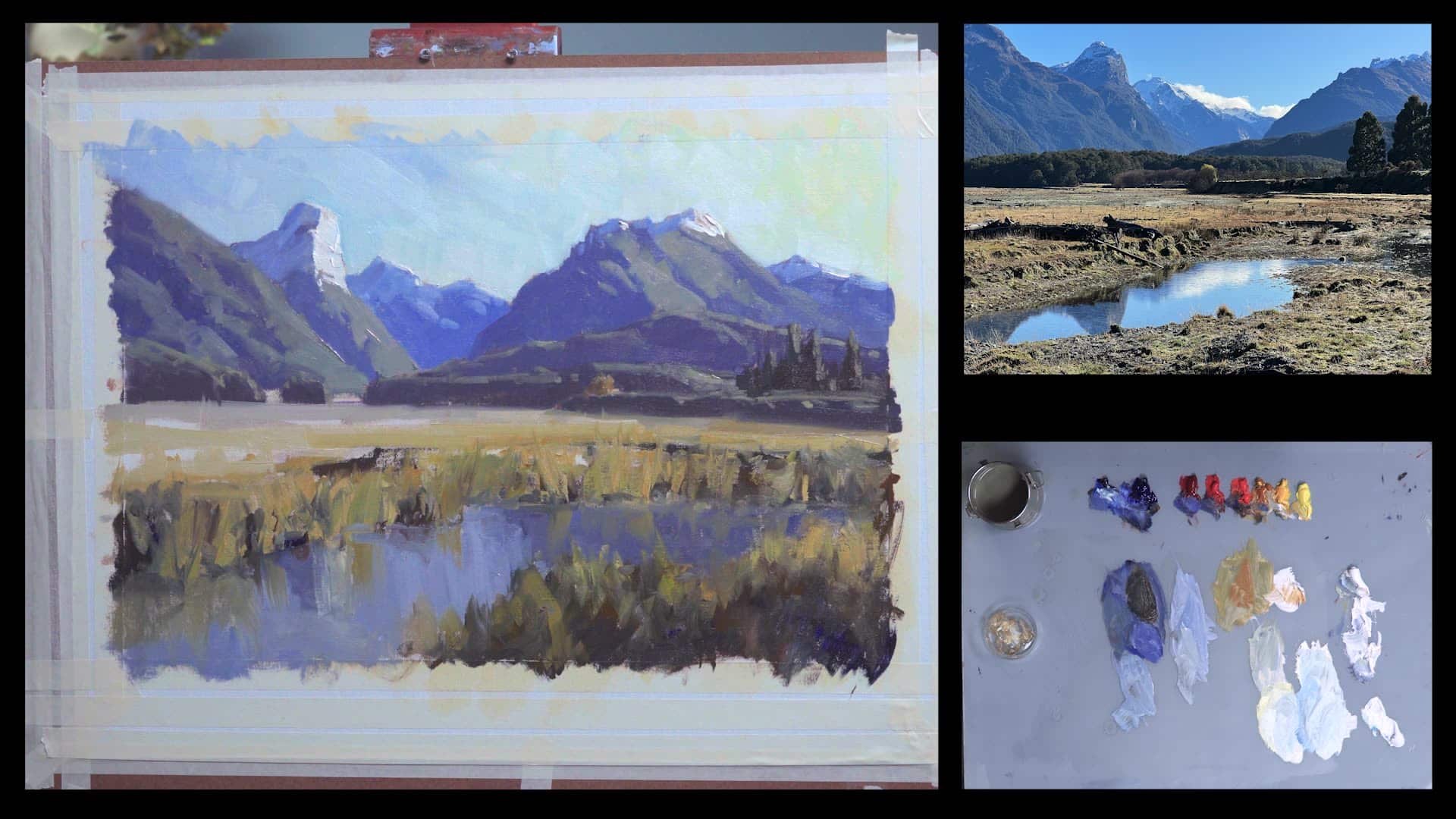
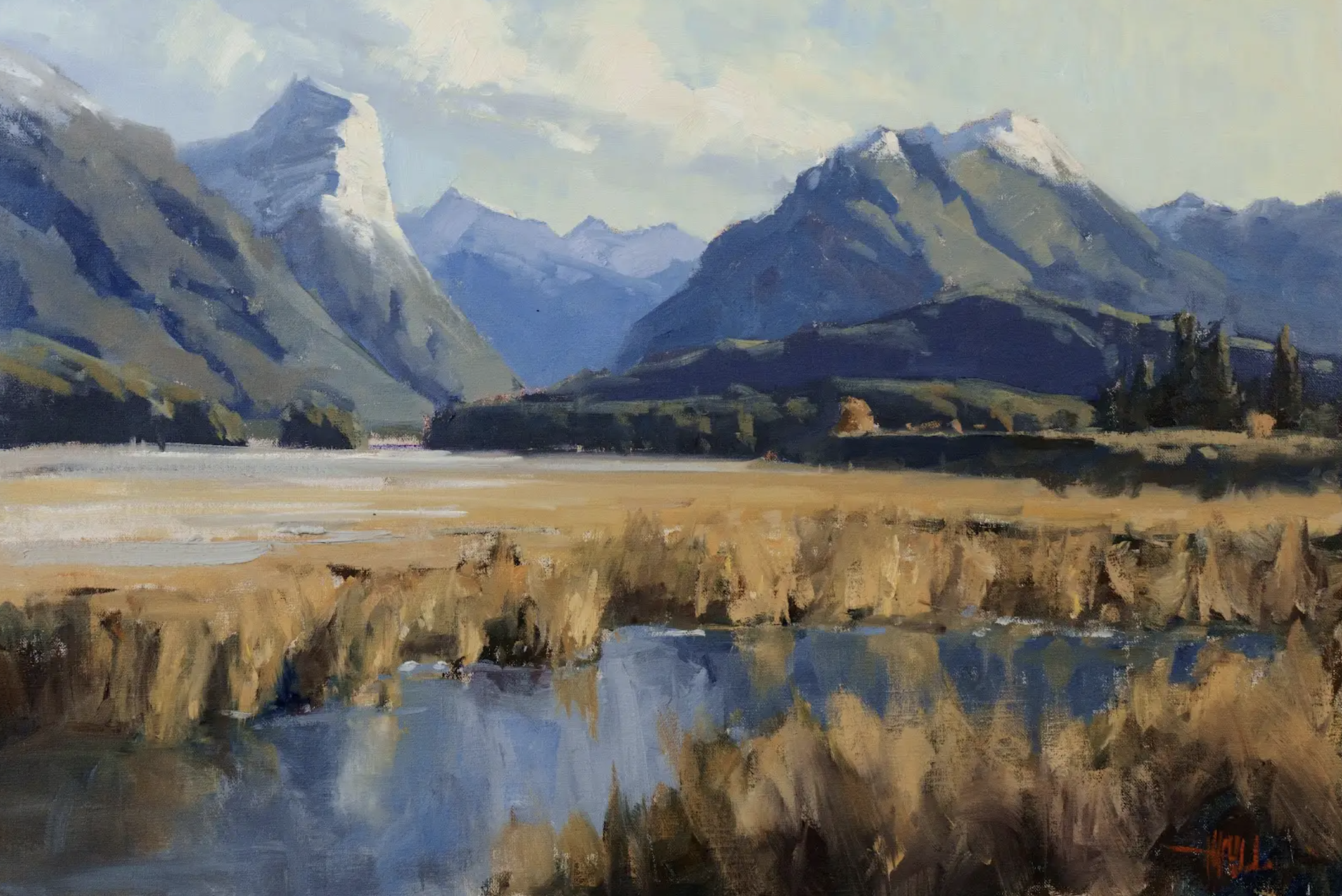
He does it by painting one of the most overwhelming alpine landscapes on earth ... the view from the Dart River toward Mount Chaos and the Cosmos Peaks in New Zealand’s Southern Alps ... and reducing it to bold shapes, confident color, atmospheric depth, and the energy of a man who was there and felt it.

One vista. One large brush for 90 percent of the work. A limited palette. No fussy details.

There are no individually rendered rocks on the far peaks. No careful tree-by-tree accounting of the slopes. No photographic precision in the snow.

But ... look at it.

You can feel the cold. The distance. The thin air. The scale of something so large it changes how you breathe.

The mountains aren’t finished. And that’s exactly why they feel real.

Before we look at how he does it, let me tell you how Scott Hamill ended up painting at the foot of the Southern Alps in the first place.

Because that story is half the method.

Available in both Streaming and DVD Formats

Meet Your New Instructor

Scott Hamill!

Meet the late-blooming Californian who paints mountains the way he learned to see them ... at the foot of New Zealand’s Southern Alps.
Born and raised in California, Scott Hamill grew up between the Pacific Ocean and the Sierra Nevada. Surfing. Fishing. Backpacking. Canoeing. He has spent his life in landscapes that move ... water, light, weather, altitude.

But he didn’t become a painter first.

He became a physical therapist. A good career. Steady work. The brushes he’d used when he was younger went into a drawer, and the drawer stayed closed for a long time.

He picked up plein air painting seriously at 43.

Not as a hobby. As a commitment. What he calls “brush mileage” ... painting the same subjects again and again, outdoors, in real weather, until the hand starts to know things the mind hasn’t caught up with yet.

Then came the trip that changed the direction.

In 2010, Scott flew to New Zealand to fish for brown trout on the South Island. One afternoon in Glenorchy, a small town at the foot of the Southern Alps, he walked into a gallery.

On the walls were large plein air paintings by a New Zealand artist named John Crump. Bold. Fluid. Mountains are reduced to clean color, big shapes, and confident brushwork. Nothing overworked. Nothing timid. 

Every canvas felt like a window left open to cold alpine air.

Scott met Crump. He bought a painting and an instructional video. He flew home.

And he pulled out the easel.

He returned to New Zealand. Studied with Crump. Painted alongside him. 

Learned to see the way Crump saw ... not the inventory of a landscape, but the feeling of it. The weight of the light. The temperature of the distance. The architecture underneath the beauty.
The more he painted outdoors, the more he understood what separates a painting that describes a place from a painting that puts you there: knowing what to leave out.

That understanding is what he now teaches.

Today, Scott is an Artist Member and Monterey Chapter Co-Chair of the California Art Club. A Signature Artist Member of the Laguna Plein Air Painters Association. His Redwood Solitude received the Modern Impressionist Award of Excellence at the California Art Club’s 114th Annual Gold Medal Exhibition in 2025. His Wilder Meadows was selected for the 115th. He was invited to the 2024 and 2026 Laguna Beach Plein Air Invitationals.

PleinAir Magazine featured his work and his New Zealand connection in “Finding Inspiration on the Other Side of the World” in the February/March 2025 issue.

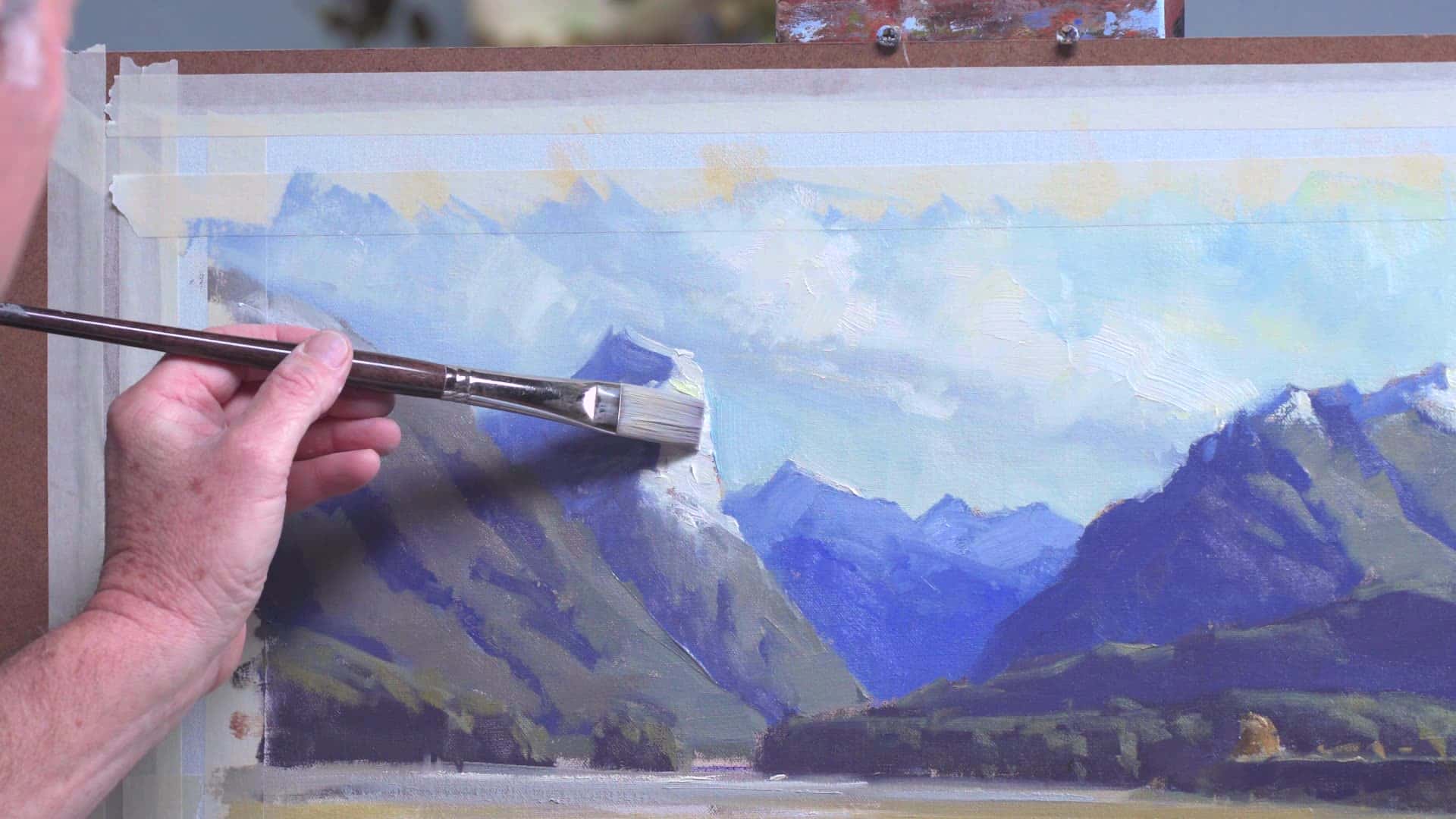
His painting gear fits into a backpack. His palette is deliberately small. His go-to brush is a single #12 synthetic flat that handles 90 percent of the work.

But what his students tend to mention first isn’t the awards or the gear.
It’s that he paints beside you, not above you. He explains what he sees while he’s seeing it. He’s warm, funny, energetic, and specific. He remembers what it felt like to start late, to struggle with tight paintings, to stare at a vast mountain scene with no idea where to begin.

And he teaches from that memory ... not from a pedestal.

Available in both Streaming and DVD Formats

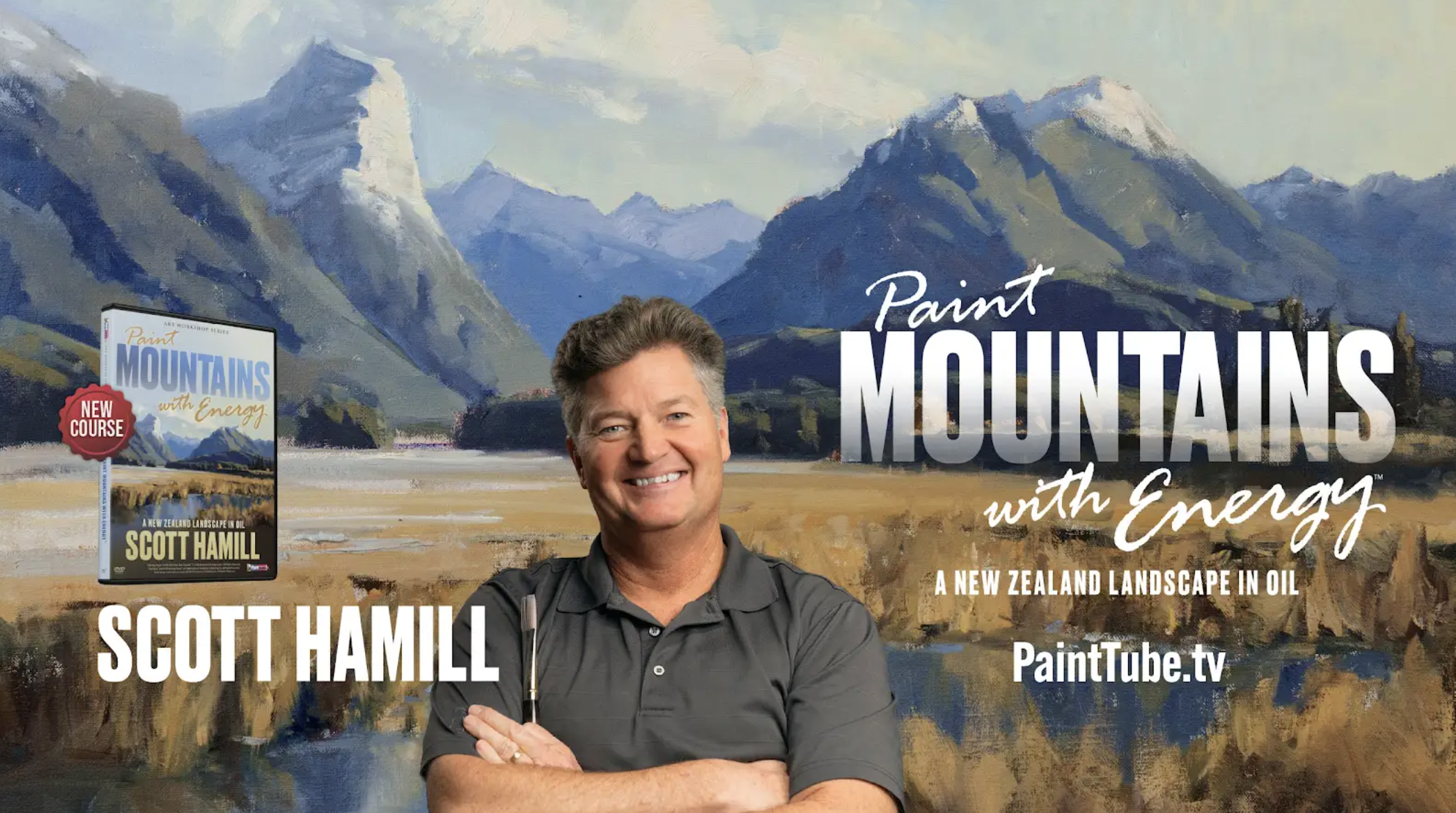
Introducing Scott Hamill’s Brand NEW Oil Painting Course: Paint Mountains With Energy: A New Zealand Landscape in Oil

Inside Paint Mountains With Energy, Scott Hamill demonstrates something most landscape painters have never been shown: the reason a mountain painting feels vast and alive has almost nothing to do with how much detail you put in ... and everything to do with how much you deliberately leave out.

Scott takes one of the most overwhelming alpine views on earth ... the Dart River looking toward Mount Chaos and the Cosmos Peaks in New Zealand’s Southern Alps ... and paints it with a single large brush for 90 percent of the work. A limited palette. Bold shapes. And the restraint to let the atmosphere do what no amount of rendering can.

The result is a painting that reads from across the room yet reveals loose, energetic brushwork up close. Mountains that feel three miles deep. Air you can almost breathe. Not a single overworked passage on the surface.

That ability came from years of painting outdoors in mountain weather, a New Zealand mentor who taught him to see before he painted, and a method Scott calls Controlled Omission ... the discipline of choosing what to say and what to stay quiet about.

Inside this comprehensive course, you’ll discover:
  • How to simplify an overwhelming mountain scene into a handful of big shapes before you ever touch paint to canvas...

    ● Why one large brush handles 90 percent of the painting ... and why that “limitation” is the fastest path to confident brushwork...

    ● The atmospheric perspective shifts that make distant peaks dissolve into sky instead of sitting on top of it like flat cutouts...

    ● How to “squint the mountain down” to its essential value structure in minutes ... so you know the painting works before you invest hours...

    ● Why your carefully rendered rocks and ridges are actually collapsing the depth in your painting ... and the simple fix that restores it...

    ● How to lock in your darkest darks first, creating a value foundation that holds everything together...

    ● The warm-to-cool temperature shifts that tell the viewer’s eye exactly how far away each ridge is...

    ● How to paint mist, altitude light, and the blue atmosphere that lives in the gaps between ridgelines...

    ● Scott’s “fresh eyes” finishing technique ... the question he asks before any final mark that prevents the most common mistake in landscape painting...

    ● ...and so much more from a painter whose own life was changed by the landscape he’s teaching you to paint.
This course is perfect for:
  •  Landscape painters who keep adding detail, hoping this time it will finally make the painting feel right...

    ● Anyone whose distant mountains look flat, pasted on, or uncomfortably close to the foreground...

    ● Artists who have tried to paint “loose” but ended up with something that just looked unfinished...

    ● Painters intimidated by complex mountain scenery who don’t know where to begin...

    ● Anyone who has ever finished a landscape and realized the feeling they started with left the room hours ago...
You’ll connect immediately with Scott’s energetic, generous teaching style. He explains what he sees and why he’s making each decision as the brush moves. He doesn’t lecture from a distance. He works beside you, showing you what he’s looking at, telling you what he’d change and why.

Join Scott Hamill in Paint Mountains With Energy and learn to paint landscapes that feel the way the mountain felt when you were standing in front of it ... not the way the photograph remembered it later.

Available in both Streaming and DVD Formats

Chapter Breakdown

Video Length: Over 3 Hours 

PART 1: Setting the Stage

01 — Introduction

Scott introduces a New Zealand scene near and dear to his heart, but the teaching applies anywhere in the world. His hope: this video becomes your launching point to go paint outdoors.

02 — Materials 

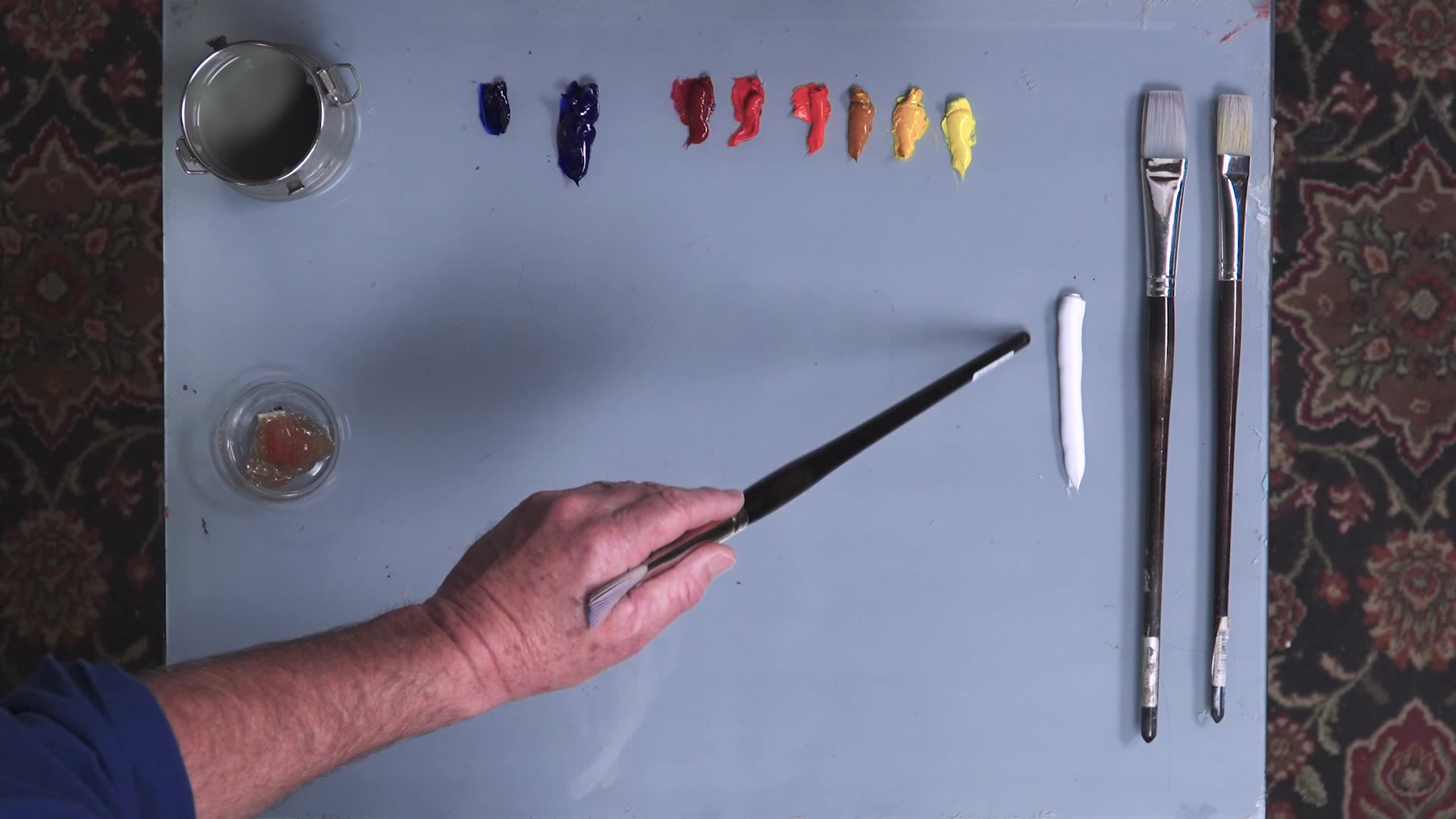
A limited palette of warm and cool primaries plus earth tones for color harmony. Homemade linen panels for custom sizes at lower cost. And the big brush you’ll use endlessly.

PART 2: The Demonstration

One painting. The Dart River looking toward Mount Chaos and the Cosmos Peaks. And the discipline to say only what the painting needs to hear.

03 — The Approach

What drew you to the scene? Paint that. Scott teaches how artists observe differently, how to establish the game plan, and why feeling comes before brushwork.

04 — Tone & Compose

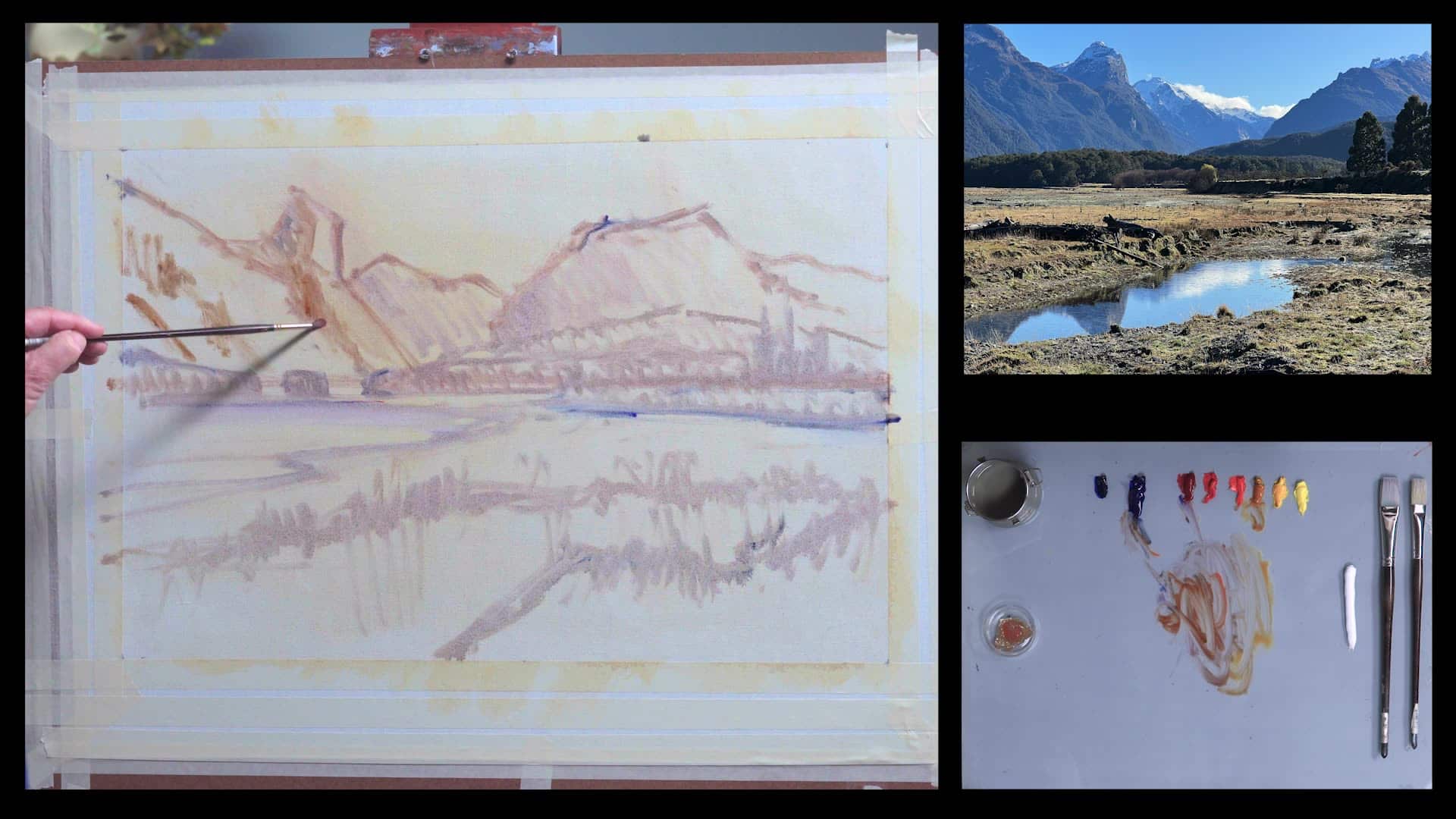
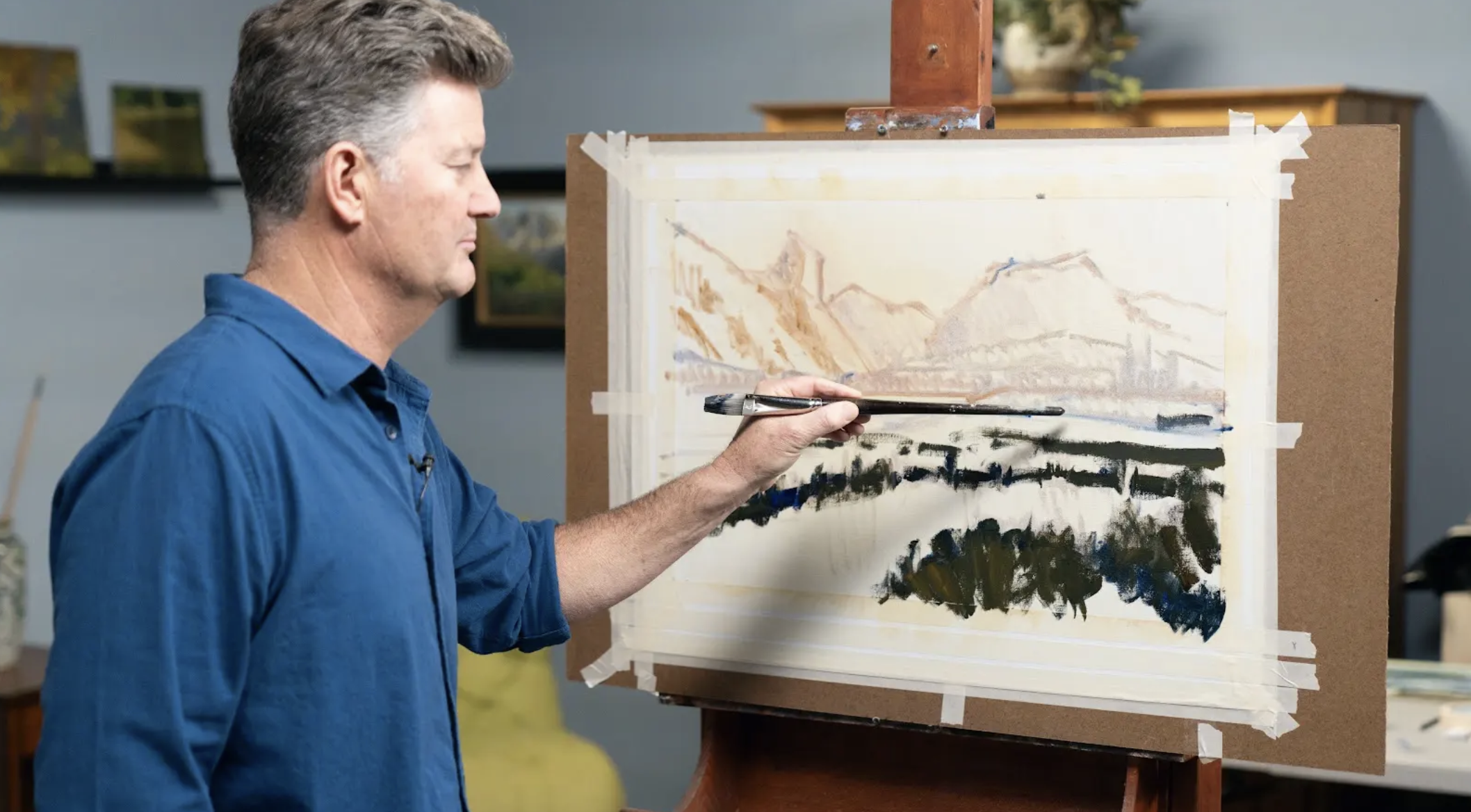
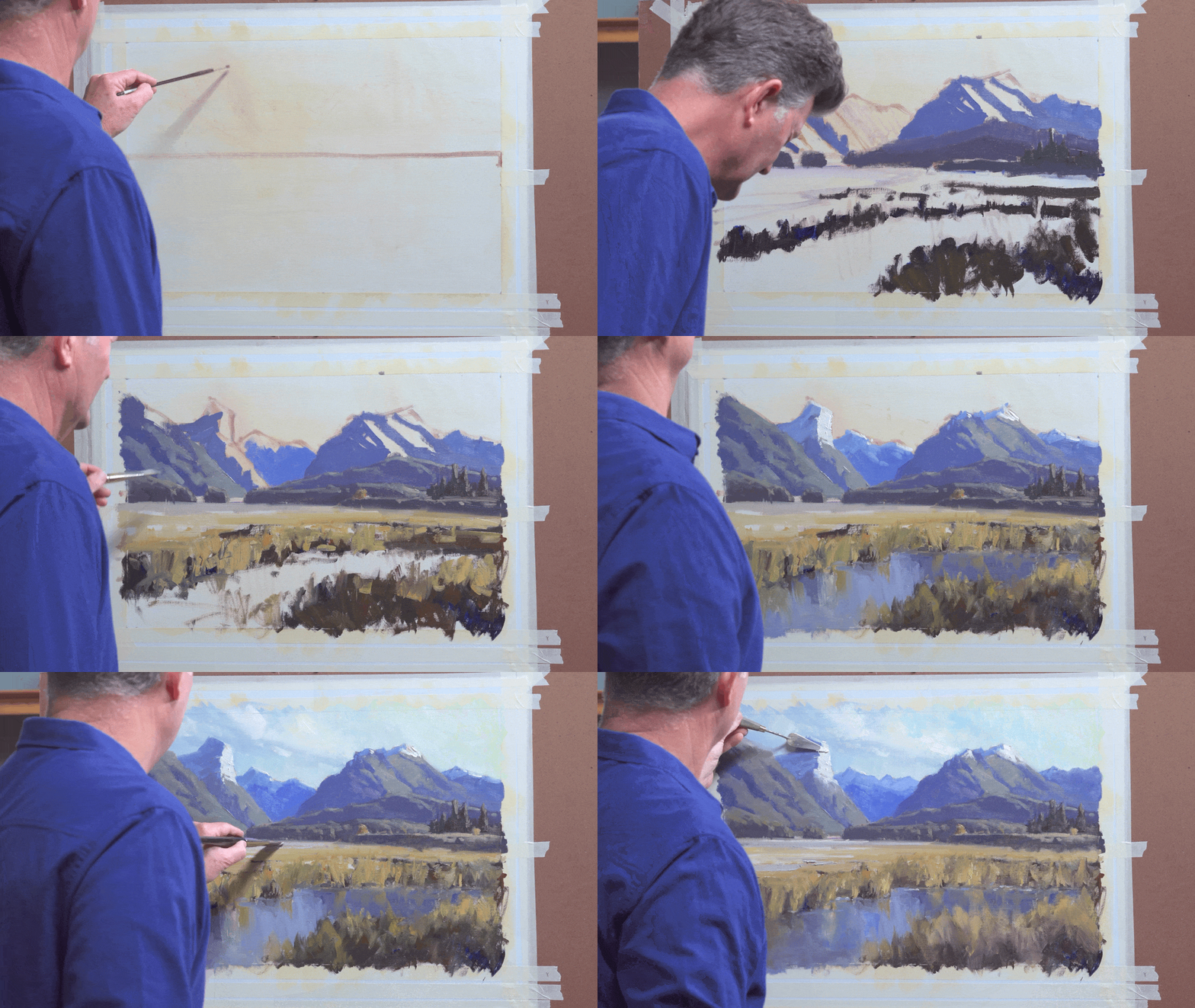
Build a foundation you believe in. Loose gestural drawing with paint ... like a conductor leading an orchestra. Crosshatch basic values, plan light and dark families, design the focal path. Get this right and the rest becomes intuitive.

05 — Lock in the Darks

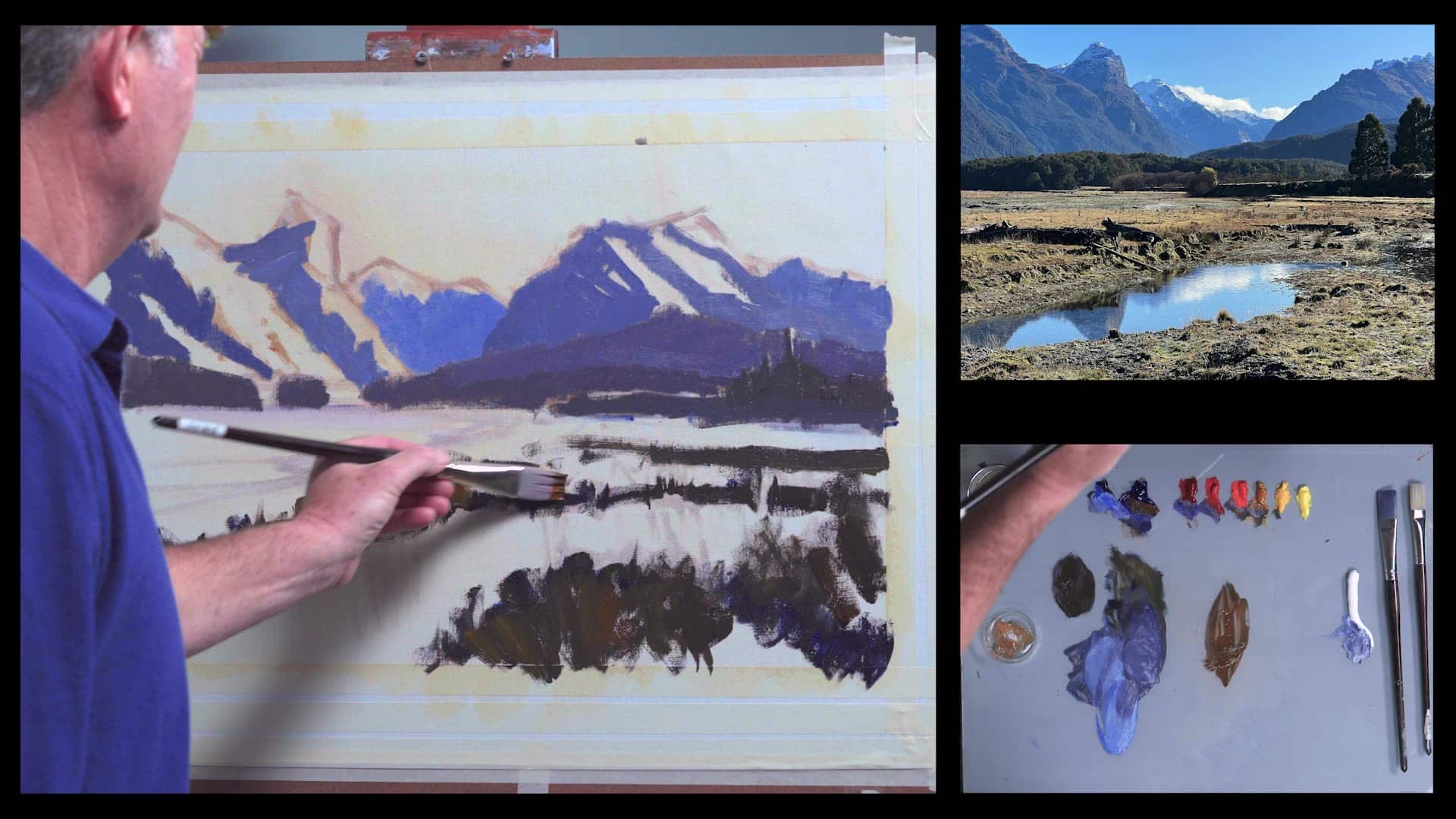
Identify the light’s direction. Establish the average value pattern and temperature. Get dancing, get moving, get loose. Put the stroke on and leave it. Learn to paint life, not a dark hole.

06 — Paint the Lights

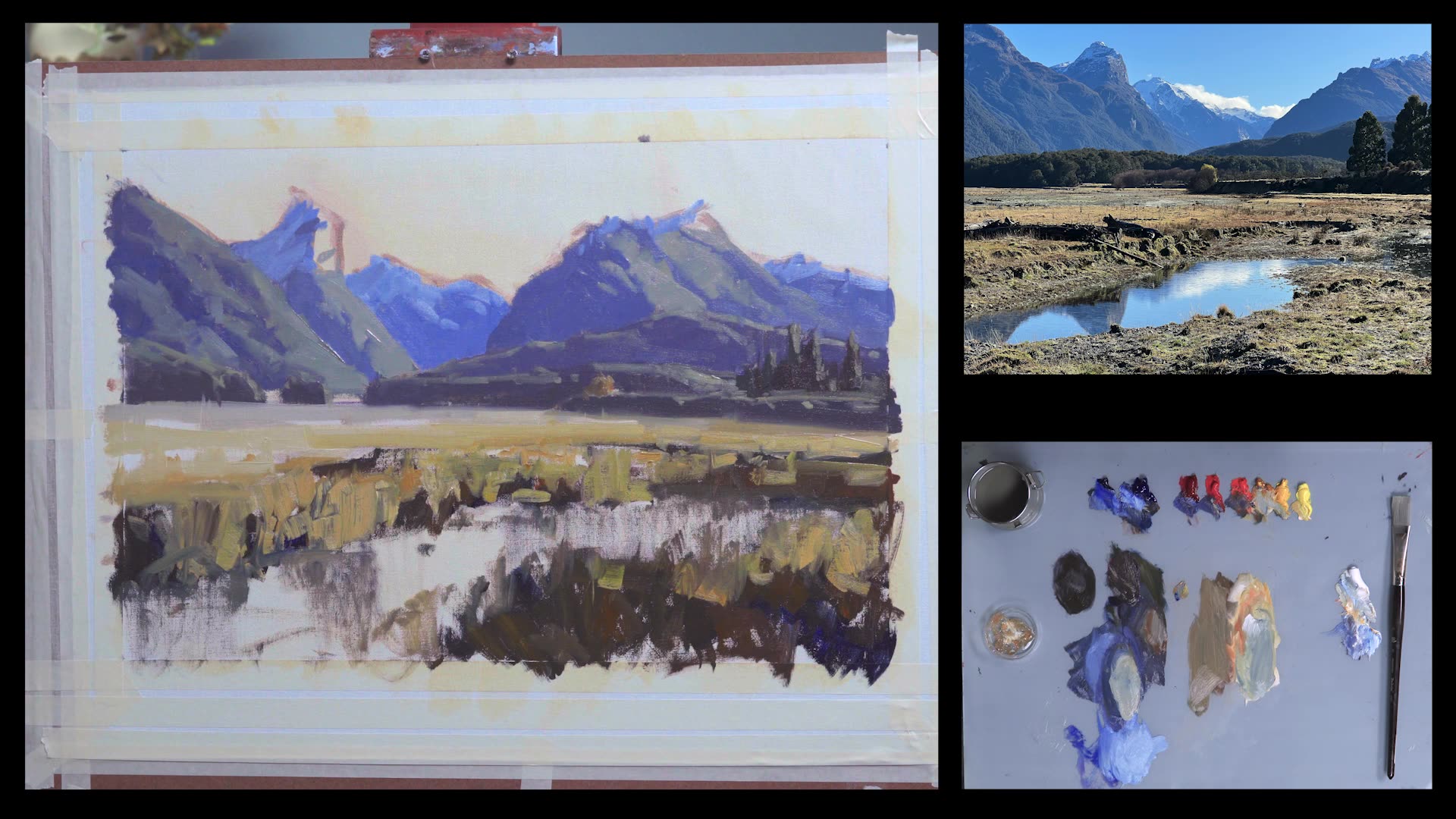
The warm bright light that comes across the scene. Tiny shifts in value and color in the distance ... “It’s never as warm as you think back there.” Blast in the paint and cover the canvas.

07 — Paint Water & Sky

Darker reflections first. Up-and-down strokes that instantly read as still water. Tips on how reflections differ from the objects being reflected. Snow caps, changing sky color, and painterly atmosphere.

08 —  Take It to Finish

Step away. Come back with fresh eyes. The painting reveals what it still needs. Strengthen depth. Lead the eye. Reestablish darkest darks, lightest lights, hardest edges, softest edges, most intense color. Then stop.

BONUSES

High-Speed View of the demonstration painting for your learning convenience

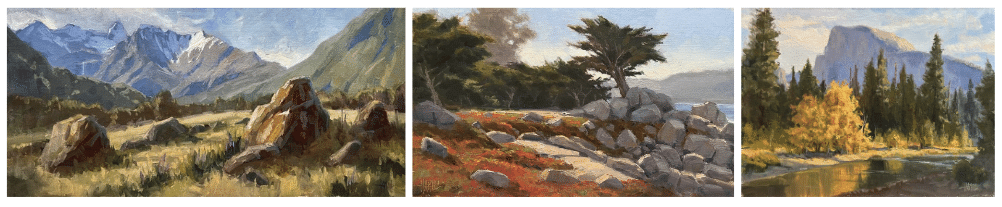
Exhibit of Works: Gallery of Scott’s paintings set to music for your creative inspiration

Insights from the Artist: Scott’s journey from physical therapy to plein air painting and the New Zealand encounter that changed his direction

What Scott Hamill Will Share Inside

Paint Mountains With Energy: A New Zealand Landscape in Oil

One Vista, One Brush, Ninety Percent: The Controlled Simplification

From one of the most overwhelming alpine panoramas on earth ... to a painting that actually breathes.

Scott Hamill does something most mountain painting instruction never attempts. Rather than telling you to simplify, he stands in front of a scene so complex it should be impossible to simplify ... and shows you exactly how.

One vista. The Dart River valley looks toward Mount Chaos and the Cosmos Peaks in New Zealand’s Southern Alps. One #12 synthetic flat brush for 90 percent of the work. A limited palette. No fussy details.

That’s what makes this course different. When the brush is too large for noodling and the palette is too small for mud, you can finally see which decisions were doing the work all along: where the big shapes sit, how the values organize, where edges stay firm and where they dissolve into the atmosphere.

There are no individually rendered rocks on those far peaks. No tree-by-tree accounting of the slopes. No photographic fidelity in the snow.

By the end, you’ll look at your own mountain reference photos and see paintings the camera never intended.

Discover the “Feel First” Order of Operations

Most artists work in exactly the wrong order. They open a reference photo and begin rendering detail, hoping the energy arrives somewhere along the way. It never does.

Scott reverses that entirely. Before touching paint to canvas, he asks one question: What stopped me here? That answer becomes the emotional center. Everything in the painting serves it. Nothing competes with it.

Establish the feeling. Design the big shapes that carry it. Lock the value structure. Then pick up the brush and paint with your whole body ... not just your wrist.

This is why his mountains feel vast instead of flat. Why does his atmosphere feel breathable instead of painted on? The feeling was protected before a single detail was considered.

You’ll also learn the habit that keeps it all honest: stepping back repeatedly throughout the painting, squinting the canvas down to its value structure, and asking two questions that settle nearly every decision. Does the painting still carry the feeling I started with? Or did I just kill it with that last stroke?

Learn What Mountains Actually Do to Light — It’s Not What You Assume

Available in both Streaming and DVD Formats
Most struggling landscape painters aren’t short on talent. They’re short on mountain hours.
A distant ridge isn’t simply “lighter.” It’s cooler, lower in contrast, softer at every edge, and shifted toward the temperature of the sky. Rocks three miles out don’t read as individual forms. They read as mass, value, and atmosphere. The air between you and the summit isn’t empty. It’s blue. It scatters light. It changes everything behind it.

These aren’t theories. They’re observations from years of painting outdoors in alpine weather, and from a New Zealand mentor who spent decades seeing the Southern Alps as light, temperature, and edge rather than geography.

You’ll also see why one large brush does what small brushes can’t. A #12 flat physically prevents you from rendering detail that doesn’t belong. It forces commitment. It transfers your body’s energy onto the surface. And it paints the atmosphere the way the atmosphere actually behaves ... in broad, confident passages, not careful strokes.

Paint Mountains With Energy: A New Zealand Landscape in Oil contains firsthand knowledge that only comes from standing in cold air with an easel. 

You’ll want to watch it more than once.

Discover Scott Hamill’s Mountain-Painting Secrets in Paint Mountains With Energy: A New Zealand Landscape in Oil!

Scott has spent years painting outdoors in mountain weather, learning from a New Zealand mentor who saw the Southern Alps as light, temperature, and edge. That accumulated knowledge is what lets him paint mountains that feel vast and alive without rendering a single unnecessary detail, and it is exactly what he hands you in this course.

Leap ahead with a complete start-to-finish demonstration, leaving behind the maze of trial-and-error and incomplete YouTube tutorials.

You have a choice...

Persist in the old way. Render every rock and ridge. Add more detail when the painting feels flat. Use smaller brushes. Spend more hours.
And hope the feeling of the mountain arrives on its own...

OR...

Learn the Controlled Omission method from an award-winning painter who brought it back from New Zealand’s Southern Alps. Feel the scene first. Build the big shapes that carry it. Lock the values. Then pick up one large brush and paint with energy.

Watch one overwhelming alpine vista become a painting that breathes. Then do it with your own landscape.

30-Day 100% Money-Back Satisfaction Guarantee!


After you go through this course, we want you to be completely satisfied and feel confident that you’ve improved your painting skills.


However, if after watching the video, you decide it’s just not for you, let us know within 30 days of purchase and we’ll refund 100% of your money.


Disclaimer

Results require practice and dedication. The techniques taught in this video need to be studied and implemented consistently to achieve improvement in your paintings. Individual results will vary based on experience level and amount of practice.

Experience The PaintTube Difference!

Enjoy Premium Art Instruction From The World’s Leading Artists


700+ step-by-step video courses so you can build your own custom curriculum and learn from home — at your pace.


PaintTube provides premium art instruction designed to help you learn faster and retain more, delivering Hollywood-quality, professionally produced, high-definition art instruction videos with extreme clarity, excellent sound, and perfect light.


Our painting demonstrations offer you extreme closeups and detail, with a better view than you could get in the first row of an in-person workshop. You’ll have clarity and understanding of each brushstroke, giving you the best art education ever.


FREE U.S. DOMESTIC SHIPPING ON ORDERS OVER $249 • LIFETIME ACCESS • NO SUBSCRIPTION

To your success!

Eric Rhoads, Publisher

PaintTube.tv

Though you can observe the techniques of any artist instantly by watching them demonstrate and by watching the videos repeatedly, please know that, though many artists offer insights that can help people overcome a lot of learning time, every artist learns at their own speed based on their own level of understanding. Painting and drawing bring great joy, though the joy may come from practicing various techniques over and over until you master them. We do not wish to indicate that you, or anyone, can skip the joy of practice and the challenges of getting better. Painting is a lifetime endeavor, and getting good does not typically happen rapidly, or instantly. Your results may vary. And please know that if at any time within 30 days you feel this video has not lived up to your expectations or its promise, we will happily refund your money.