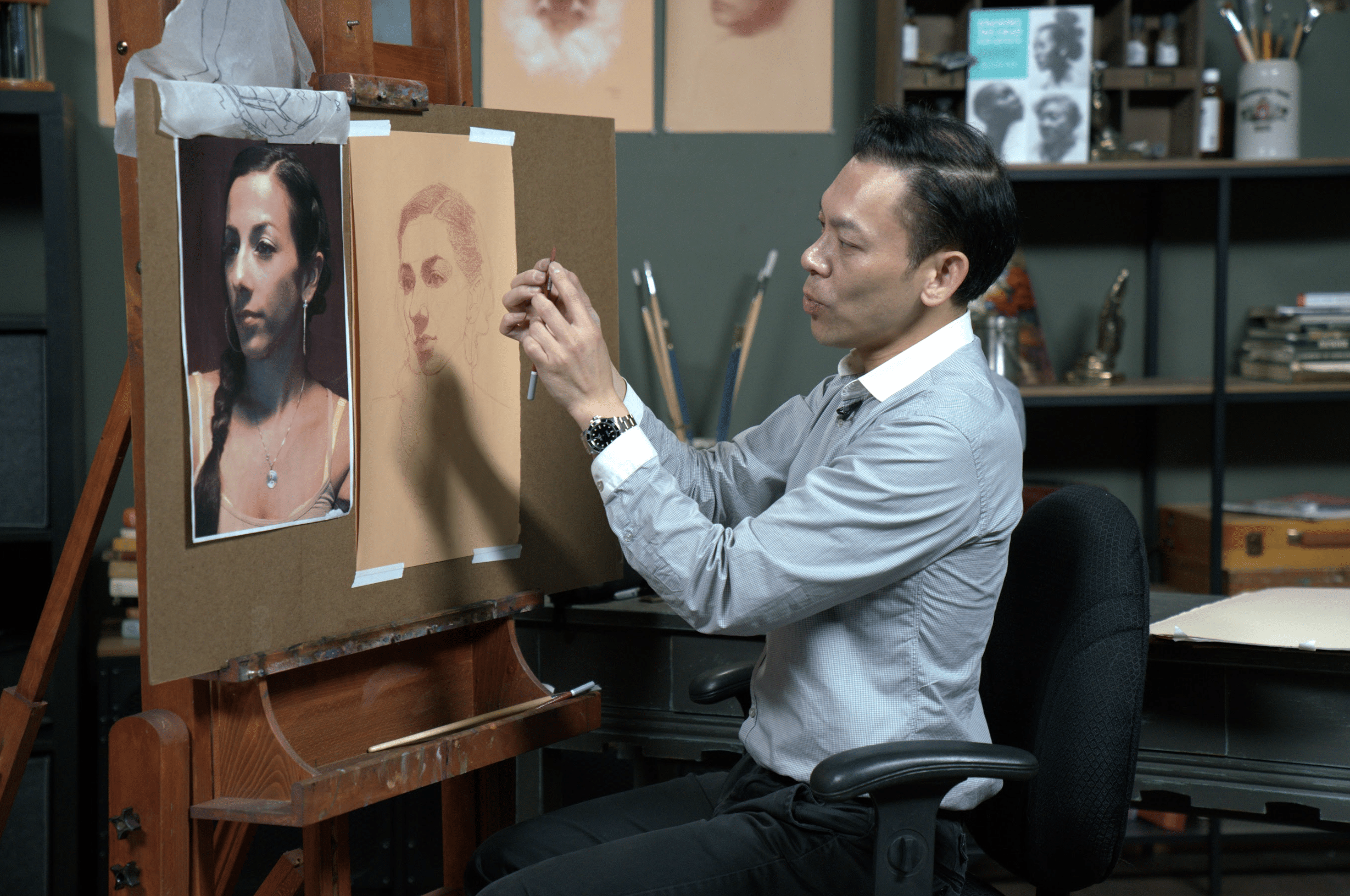
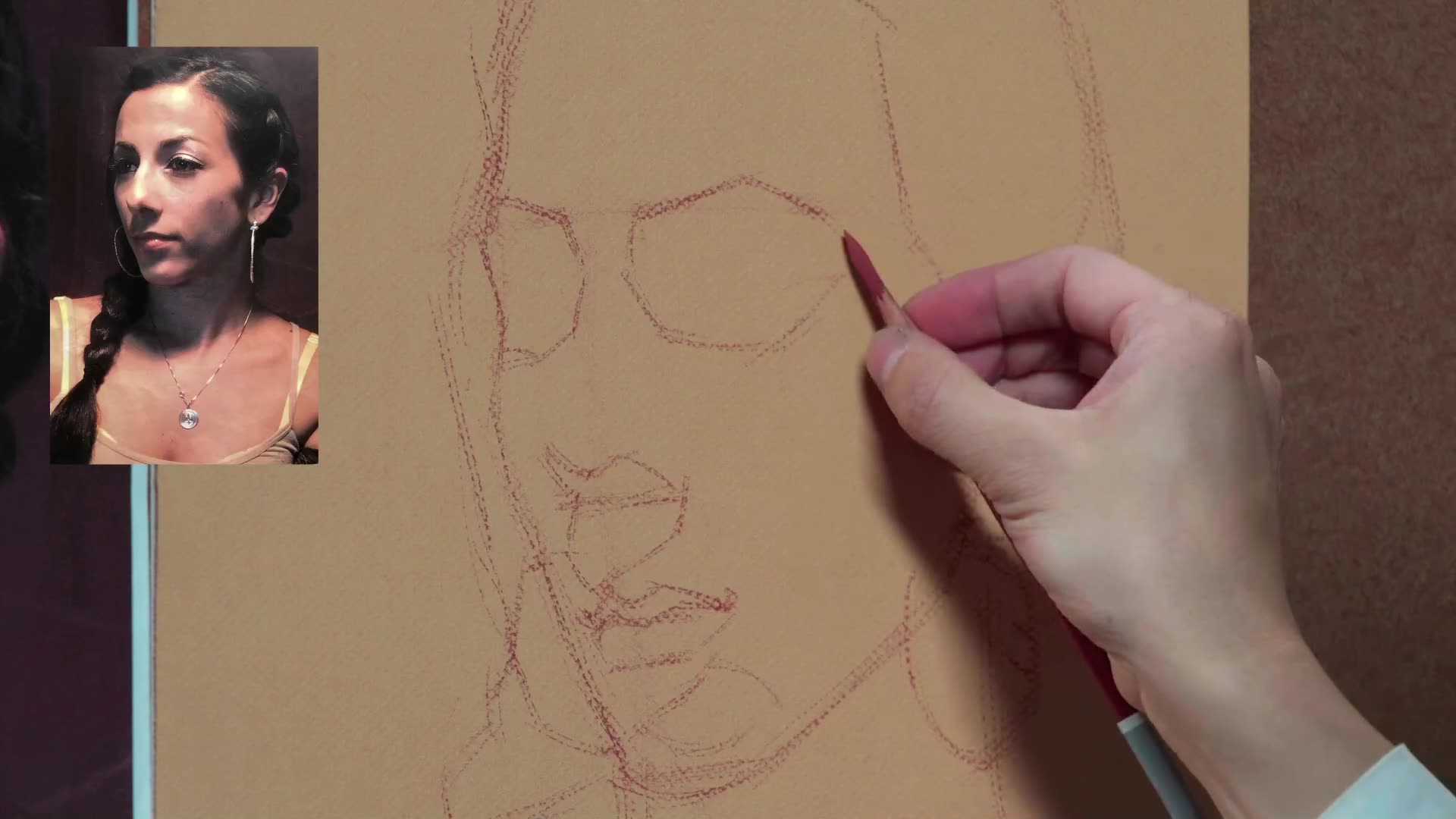
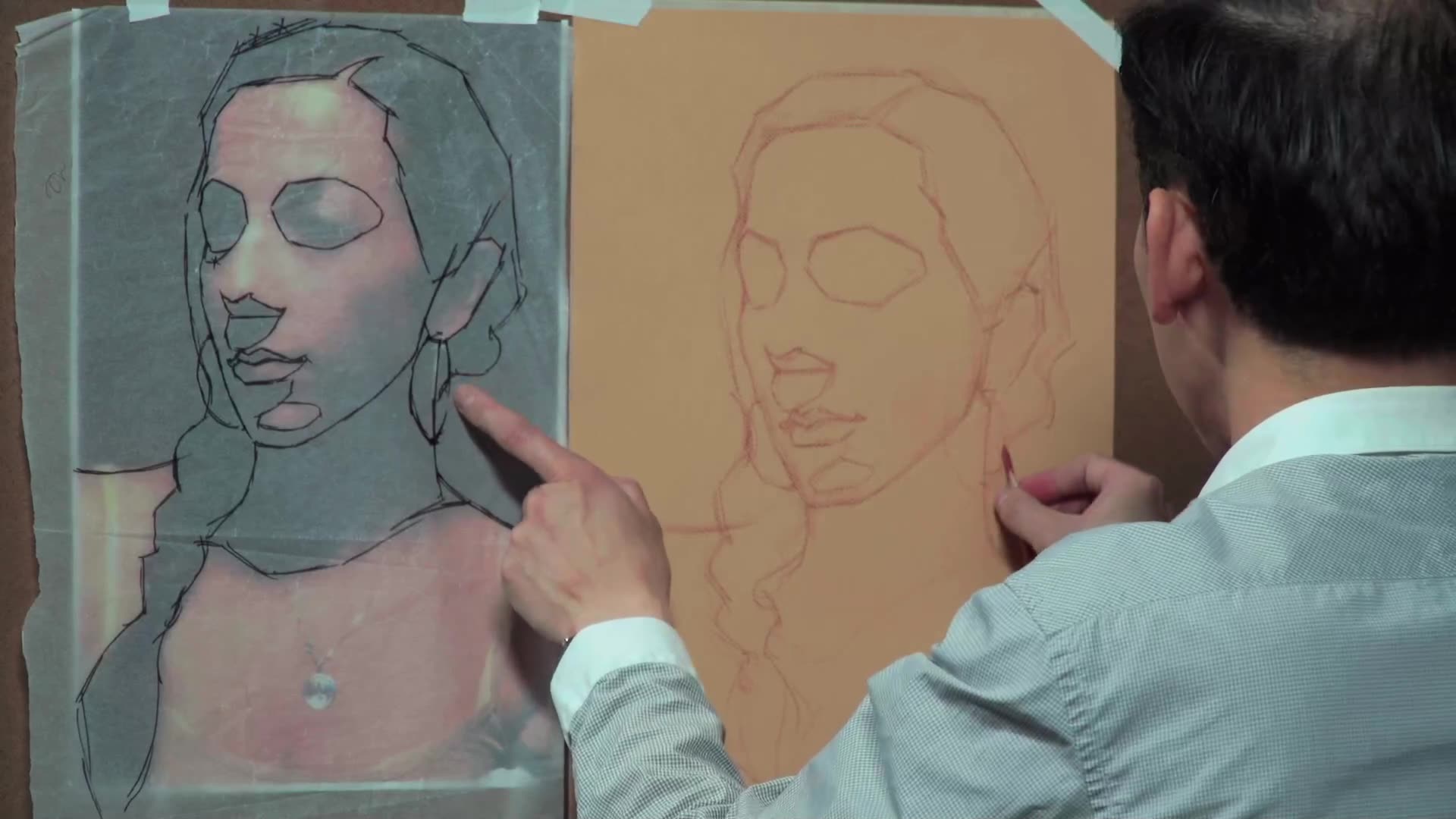
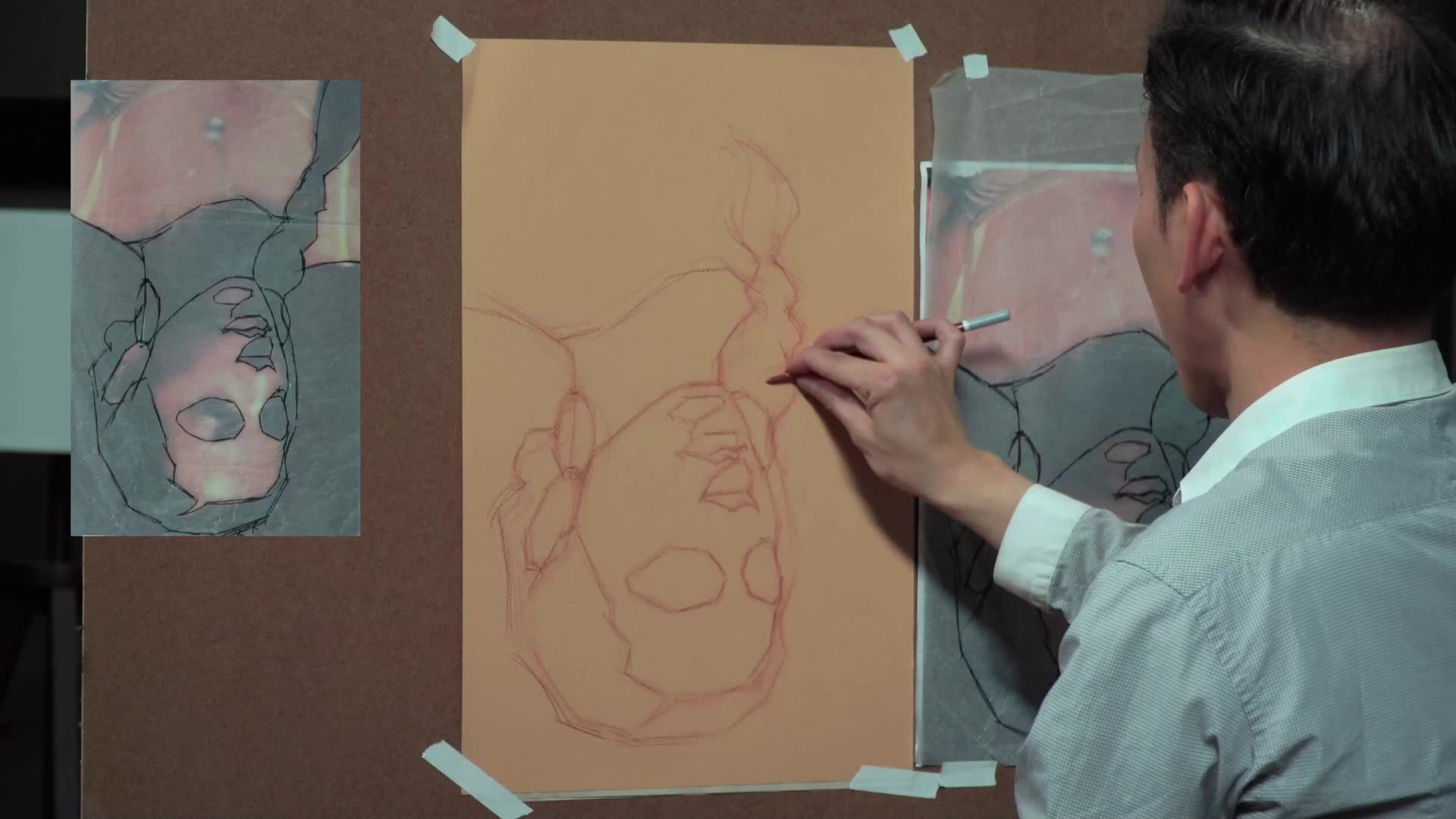
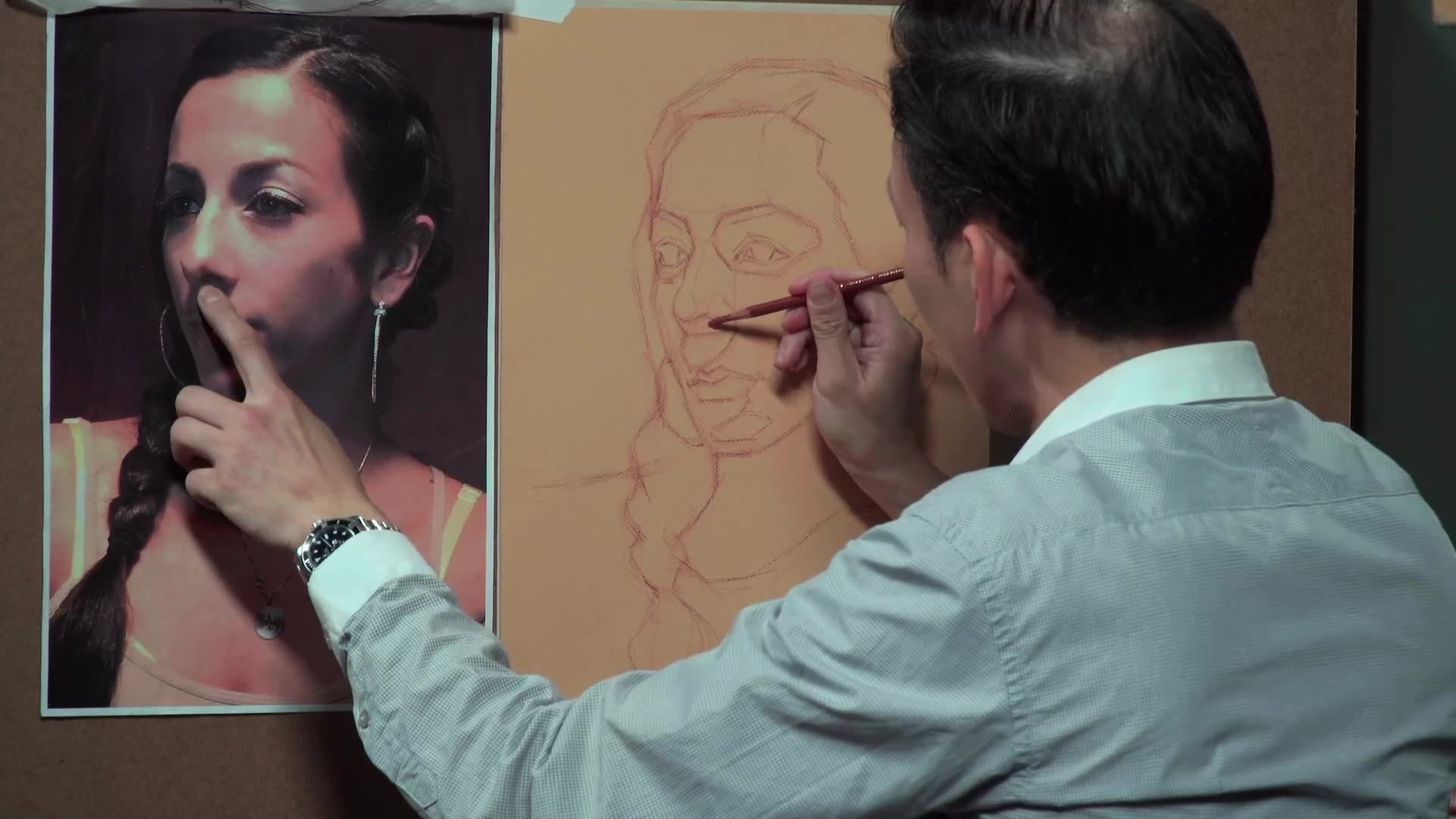
Award-winning artist Oliver Sin discovered one fundamental truth from 24 years of teaching thousands of students at Academy of Art University.
As he watched student after student struggle with the same issues, a pattern emerged…
There’s a clear difference between artists who struggle…
…and those who can create award-winning portraits in less time.
It makes sense once you understand the mistakes most artists are making:
They approach portrait drawing backwards!
You see, they focus intensely on rendering features — the eyes, nose, mouth — hoping that somehow, if each part is drawn well enough, the whole will come together into a dimensional, lifelike portrait.
But it rarely does!
They’re left with flat, lifeless results that lack the dimension and character they envisioned — despite hours or even days of careful work.
Why?
It’s because they’re missing one crucial step:
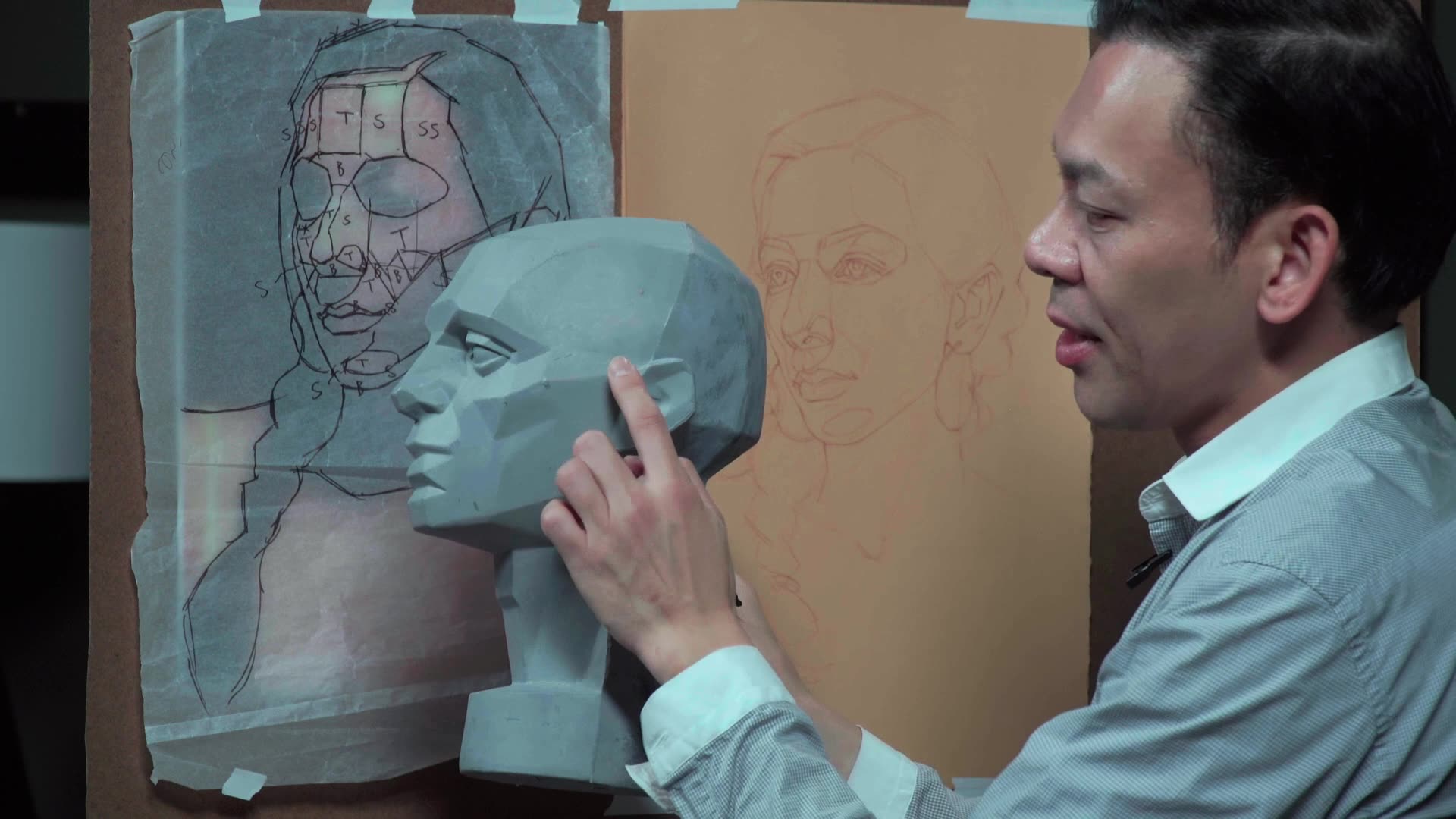
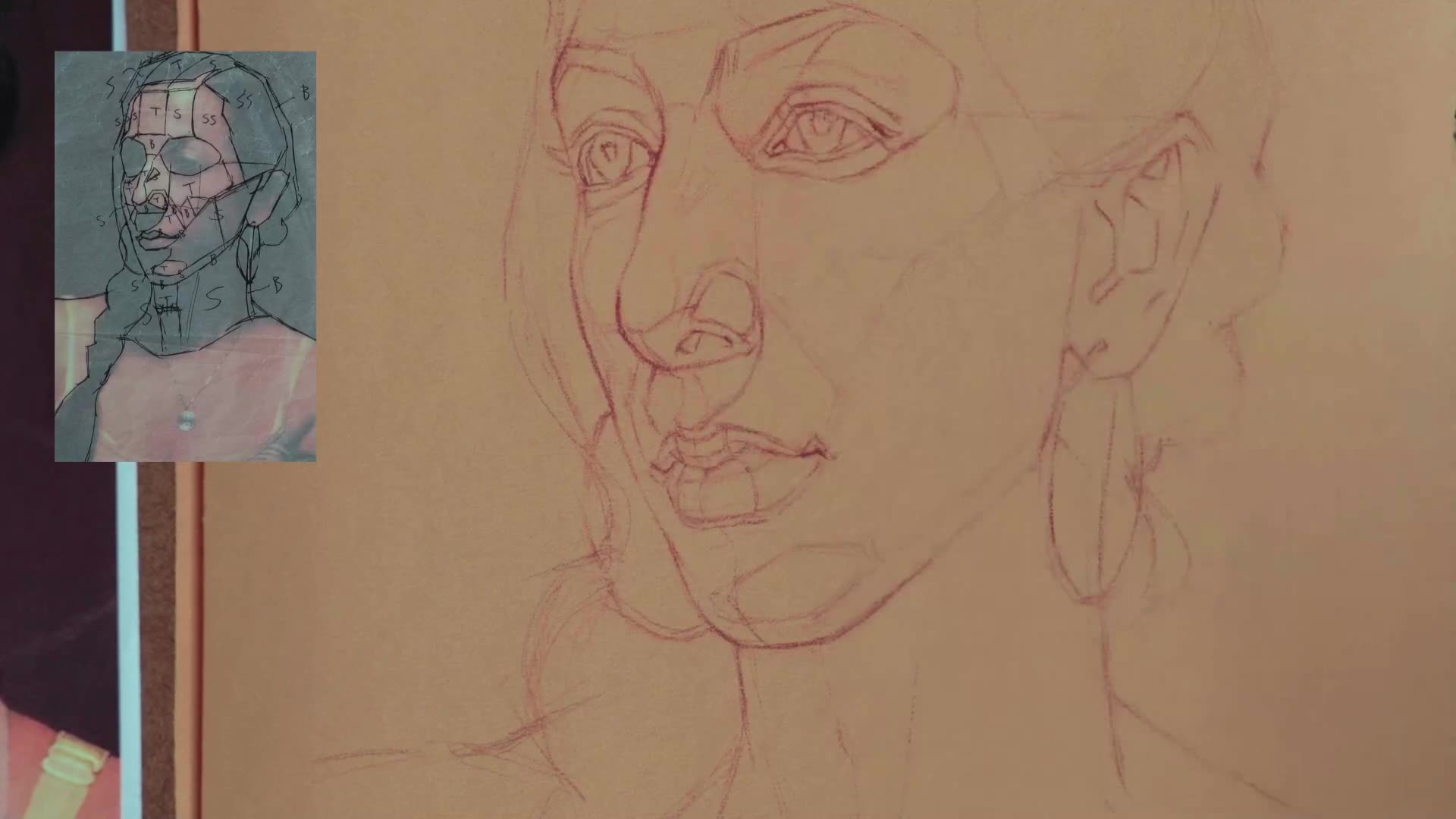
Those who learn to see and analyze shapes, planes, and structure before putting pencil to paper create dramatically better portraits.
Not only that…
They do so in a fraction of the time!
This is why the “Analyze-First Approach” is such an important step in portrait painting.
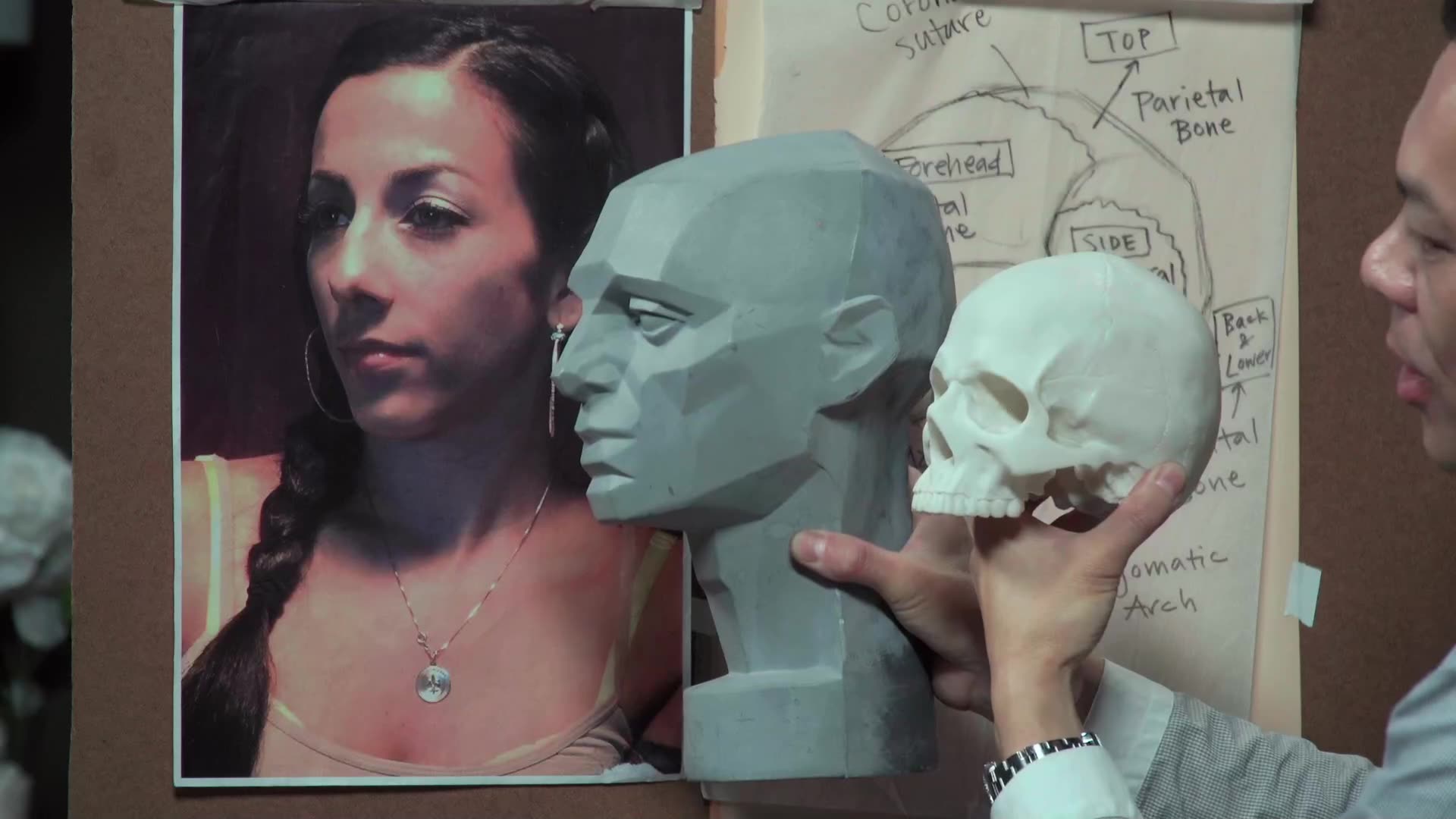
It’s an approach that combines anatomical understanding, face shape analysis, and Renaissance techniques into a step-by-step system anyone can follow.
The difference is remarkable.
Instead of spending days on portraits that never quite satisfy…
…Oliver’s students learn to create classical portraits with depth and character in hours instead of days!
How is this possible?
Here’s the fundamental truth:
When you understand the underlying structure and learn to see shapes instead of features, you work with knowledge and purpose rather than trial and error.
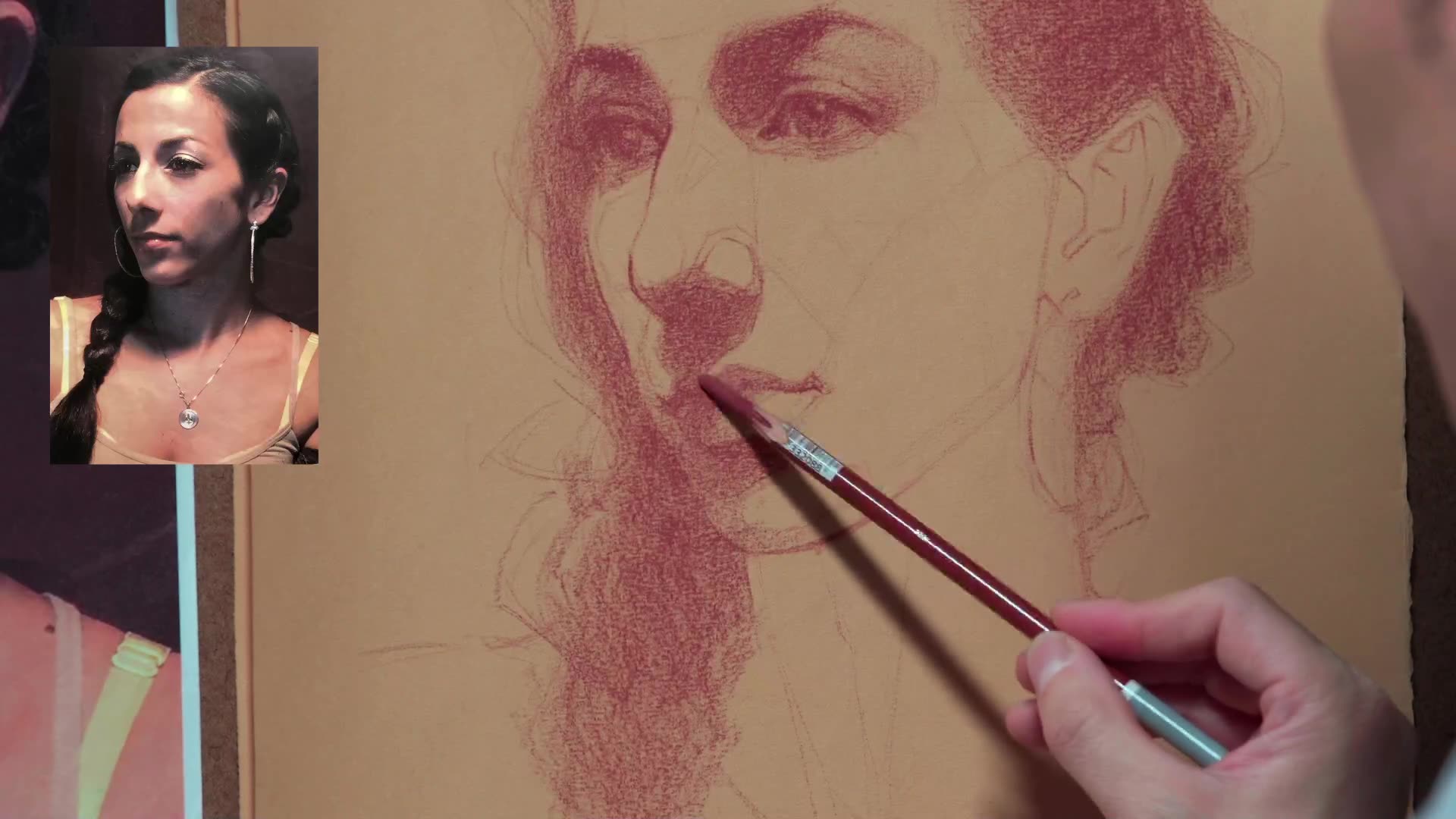
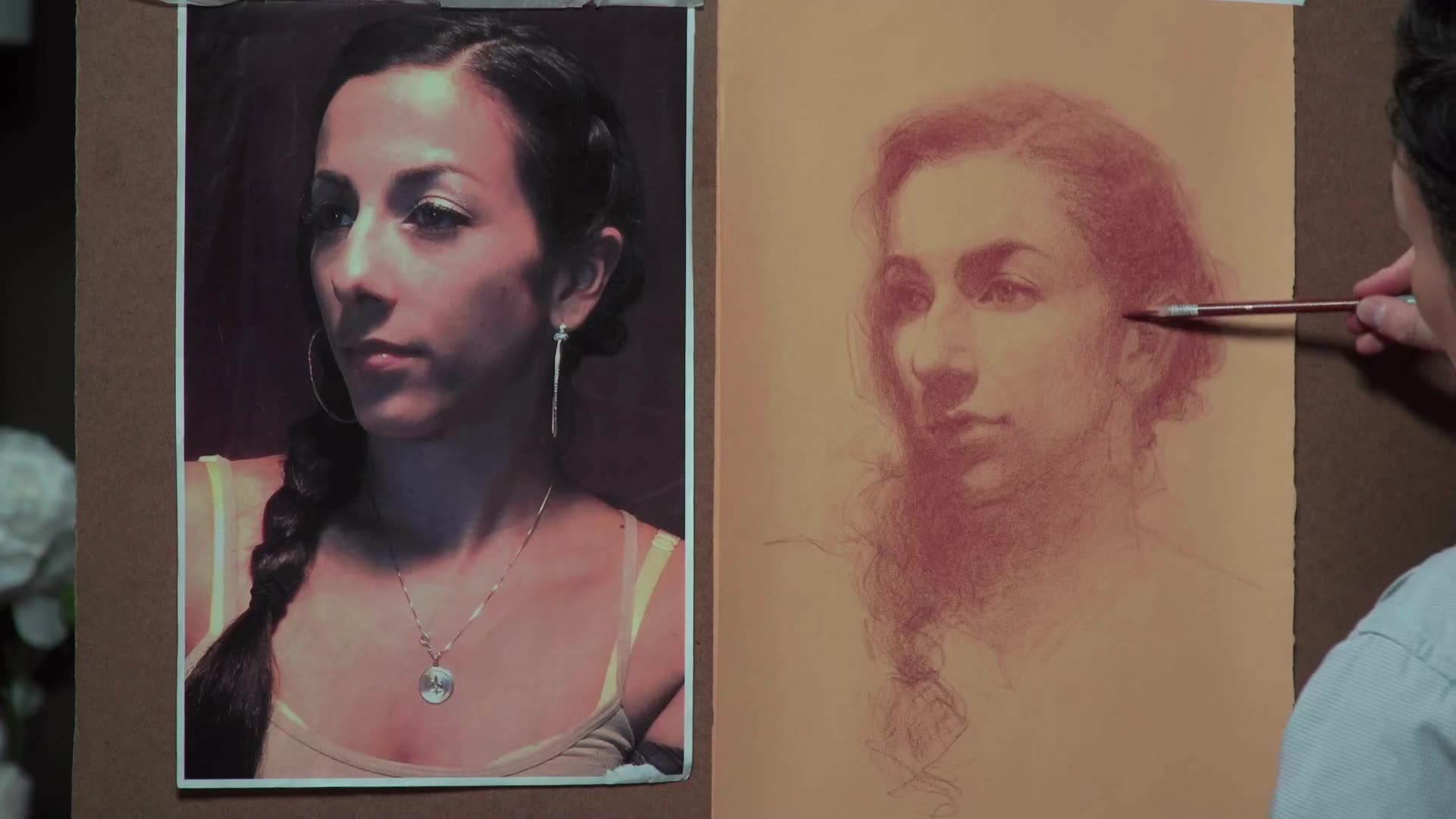
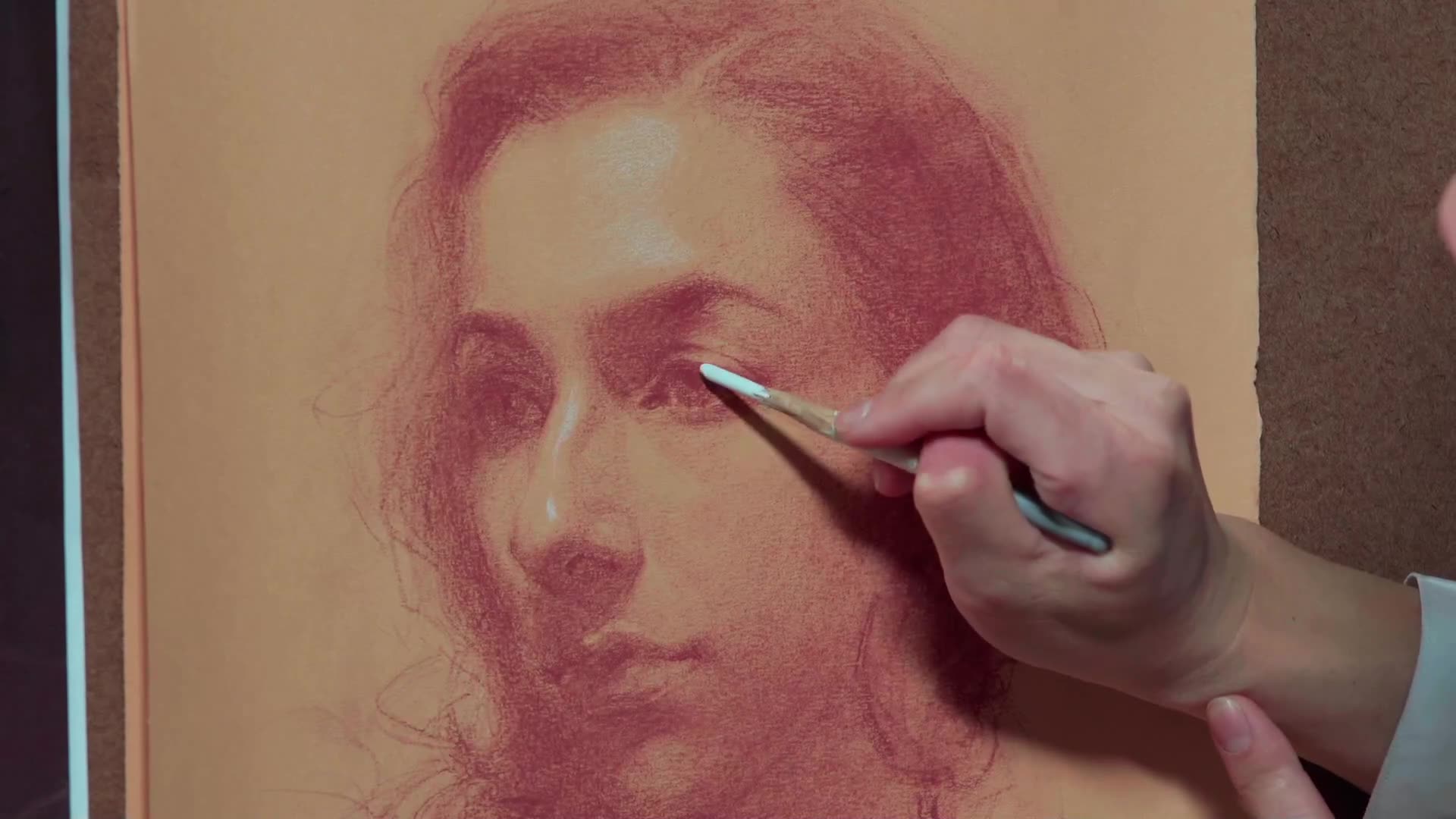
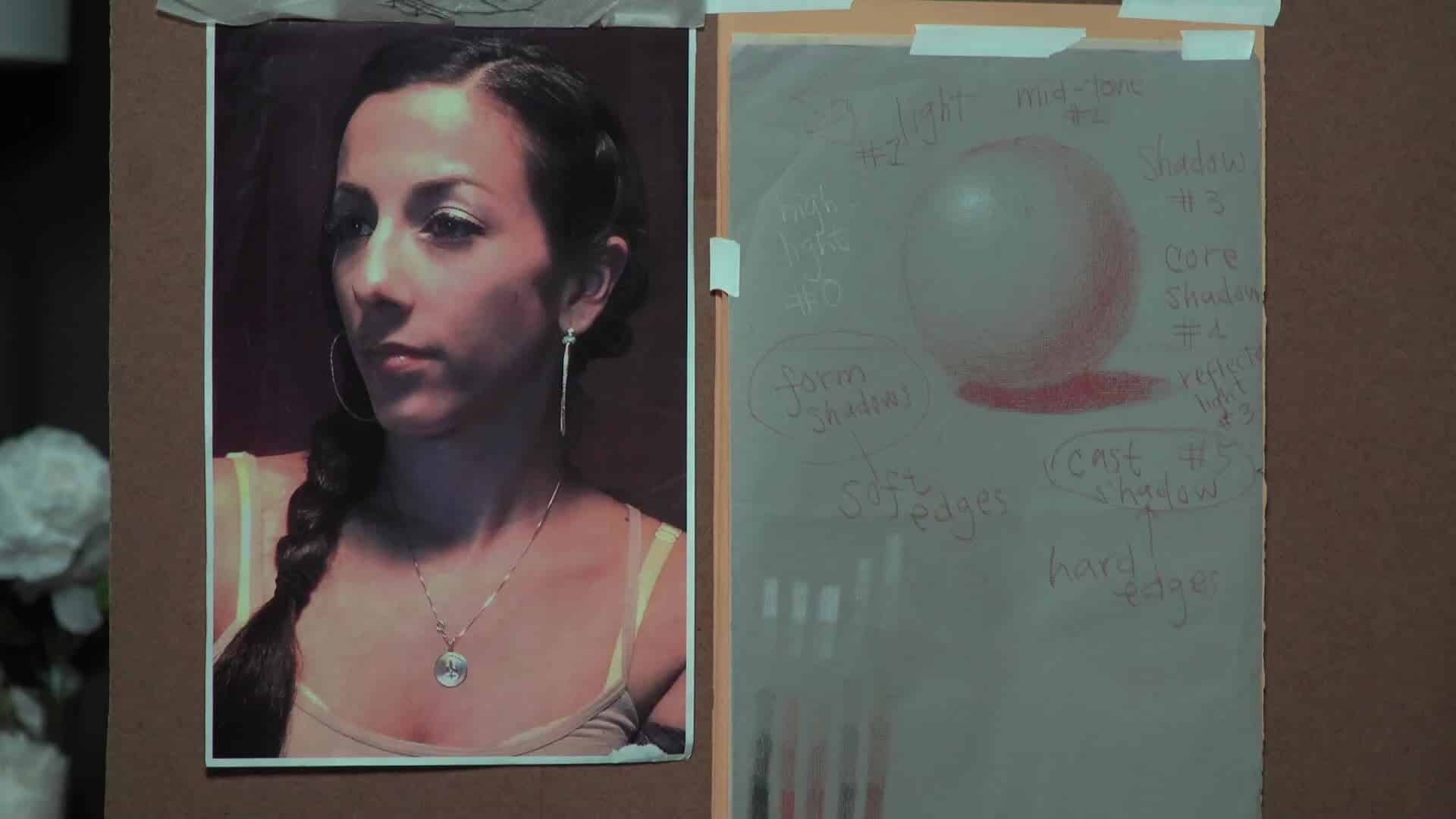
And when you apply the Renaissance techniques of sfumato (for soft, smoke-like edges) and chiaroscuro (for powerful light and shadow) that Oliver will demonstrate using sepia and white pencil...
…you’ll be able to create portraits with the timeless beauty of classical masters.
And when you follow a clear, proven approach, you develop confidence.
That’s when painting becomes truly fulfilling and satisfying.
In Classical Portrait Drawing Simplified, Oliver shares this complete approach.
From properly sharpening your pastel pencils to creating portraits with dimension, character, and classical beauty.
Whether you’re just beginning your artistic journey or looking to enhance your existing skills, this step-by-step course will transform how you see and draw portraits!